Recap: Mapping 45 Years of Flood Risk - Insights from Repetitive Loss Patterns across Washington State
Summary
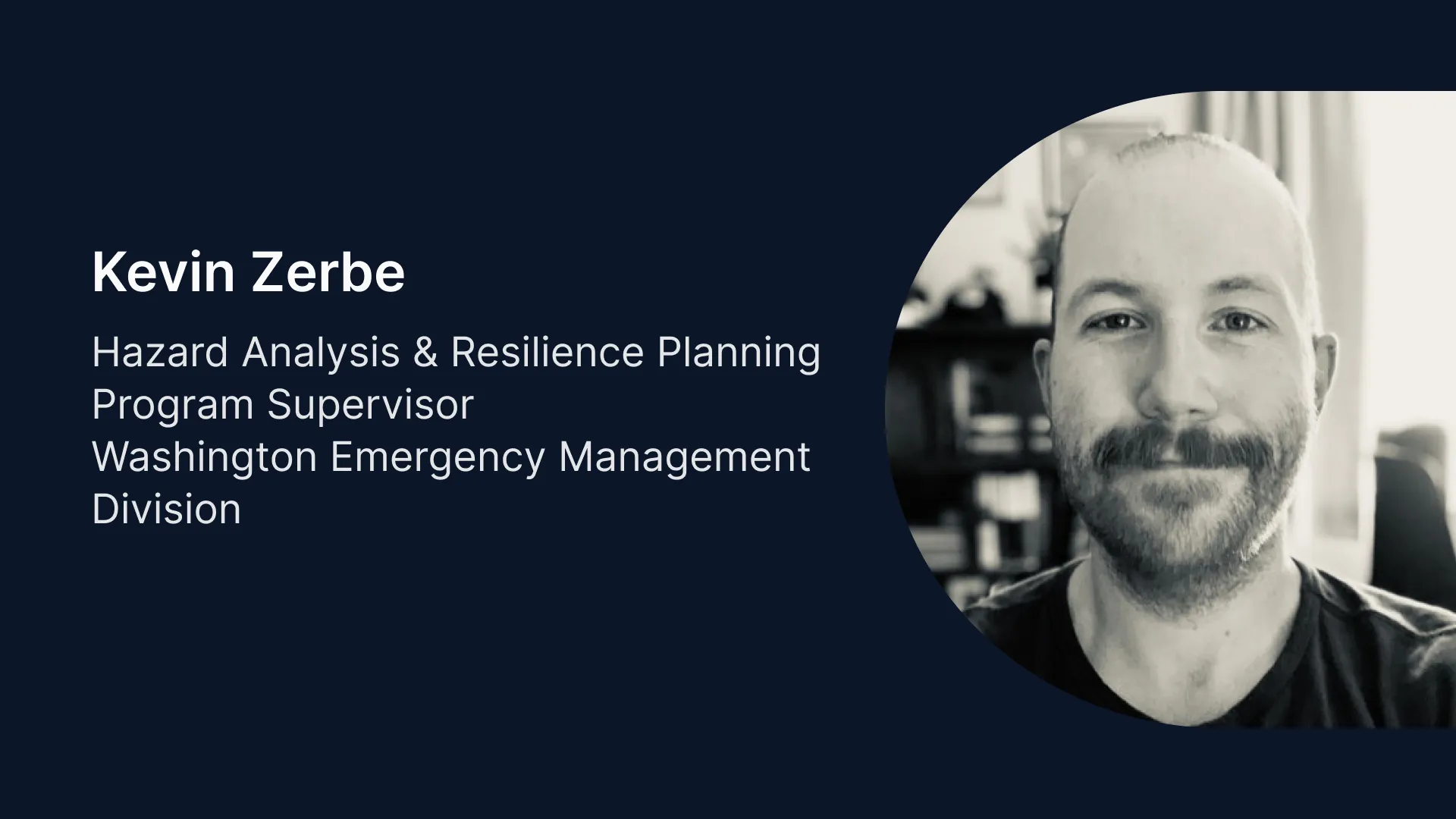
In a recent webinar, Kevin Zerbe, Supervisor of the Washington Emergency Management Division’s Hazard Analysis and Resilience Planning (HARP) program, offered a critical look at the state’s most pervasive disaster threat: flooding.
Prompted by a state statute to use data to prioritize and maximize resilience investments, the Emergency Management Division was tasked by FEMA with developing an analysis and strategy to address repetitive flood loss (RL) across Washington. Drawing on more than 40 years of RL data, the HARP team mapped losses statewide and pinpointed where flood risk is most concentrated.
Their analysis showed that repetitive loss is tightly clustered, with more than 1,000 repetitively flooded structures concentrated in western Washington. Another key finding was the “Rural Surprise”: while populous King County has the most repetitive-loss structures, rural Lewis County has a comparable number and a slightly higher percentage of total claims paid (26%). This challenges the assumption that flood risk simply tracks with population density. The team also found striking geographic stability over time, with repetitive loss consistently centered around the Seattle-Tacoma metro region for the past four decades.
Kevin explained that while repetitive loss clusters indicate high flood risk, this data analysis has limitations. As a next step, HARP plans to apply spatial regression modeling to better understand why these hotspots occur where they do, and to use those insights to more precisely target Flood Management Assistance funding toward the highest-impact risk reduction projects.
Kevin and the HARP program’s work underscores a core lesson for resilience planning: understanding flood risk takes spatial rigor, so resources can be deployed where they’ll reduce losses most effectively.
The presentation slides can be downloaded here, and the recording is below:
Want to build on the insights from the webinar? Forerunner helps communities proactively address flood risk by streamlining workflows, coordinating reporting, and engaging residents. By centralizing floodplain records, including repetitive loss data, Forerunner enables communities to meet regulatory requirements and enhance reporting capabilities. Request a demo or reach out to hello@withforerunner.com - we’d love to connect.
FAQ
Ready to see how Forerunner can support your community?
Book a demo