How Forerunner is using AI in Practice
.webp)
Summary
Local stormwater managers, code officials, and building officials face several challenges in completing the work that’s needed to protect their communities. Many municipalities experience staffing shortages and other constraints that hinder their ability to process permits, conduct inspections, and ensure compliance with regulations.
AI presents a promising solution to alleviate these challenges by automating administrative tasks and enabling local governments to do more with fewer resources. Municipalities can leverage AI-powered automation to ensure critical tasks, such as permitting, compliance checks, and risk assessments, are completed efficiently and accurately, alleviating administrative burdens and reducing manual labor requirements.
At Forerunner, we provide the modern operating system for the built environment. Our platform centralizes maps, records, and local datasets to create the high-quality, structured foundation that AI requires to be truly effective. We believe technology should amplify - not replace - human expertise. Here are the four key ways we use AI to create more intelligent, streamlined workflows:
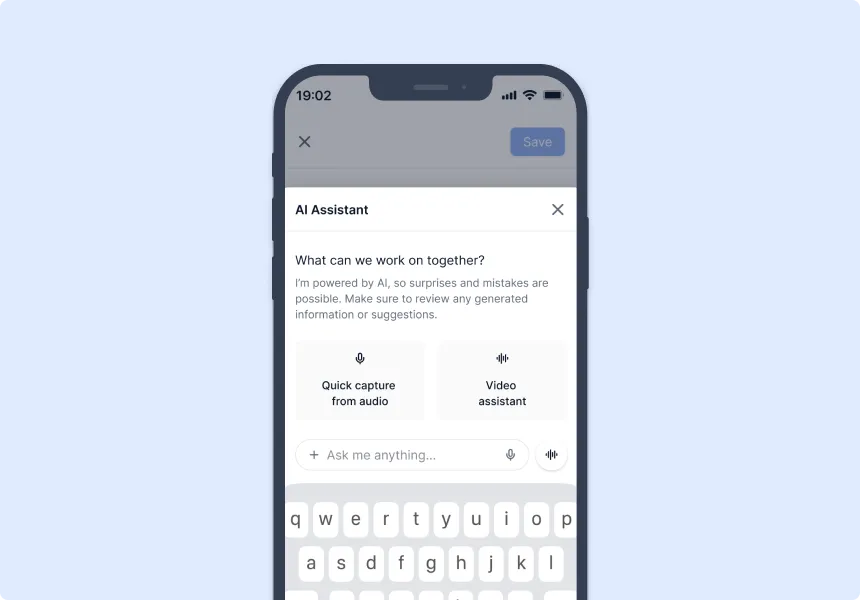
1. AI Assistant: Your Digital Partner in the Field
The AI Assistant helps teams complete large, complex, and time-sensitive forms faster without compromising accuracy.
How it works: It translates high-level field notes and observations into required forms.
The Impact: This eliminates the friction of manual data entry, speeds up form completion, and ensures consistent documentation across different users and scenarios.
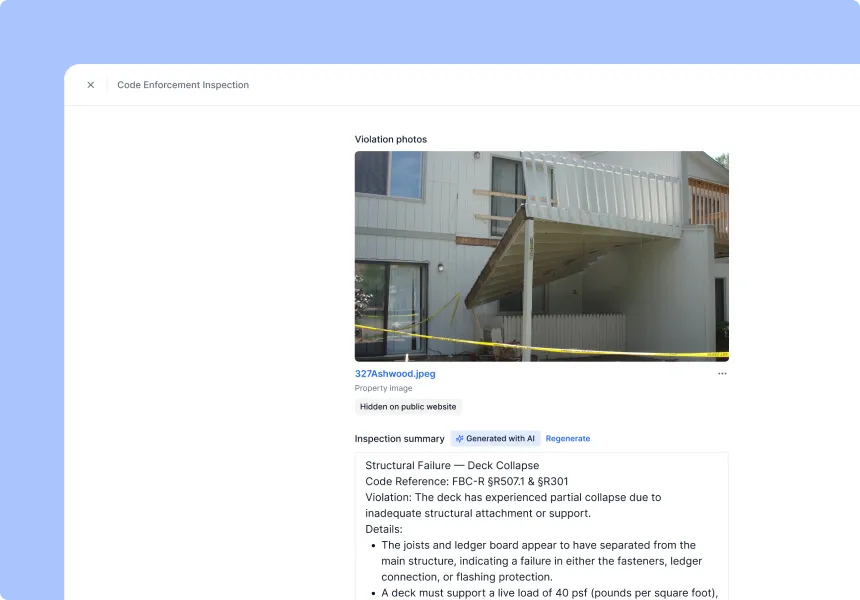
2. AI-Powered Summaries and Photo Analysis
To improve the accuracy of inspections and reporting, AI analyzes images and identifies variations or potential violations.
How it works: The system generates concise summaries of property conditions or regulatory compliance based on uploaded photos.
The Impact: Staff can identify issues instantly, leading to faster reporting and more accurate record-keeping.
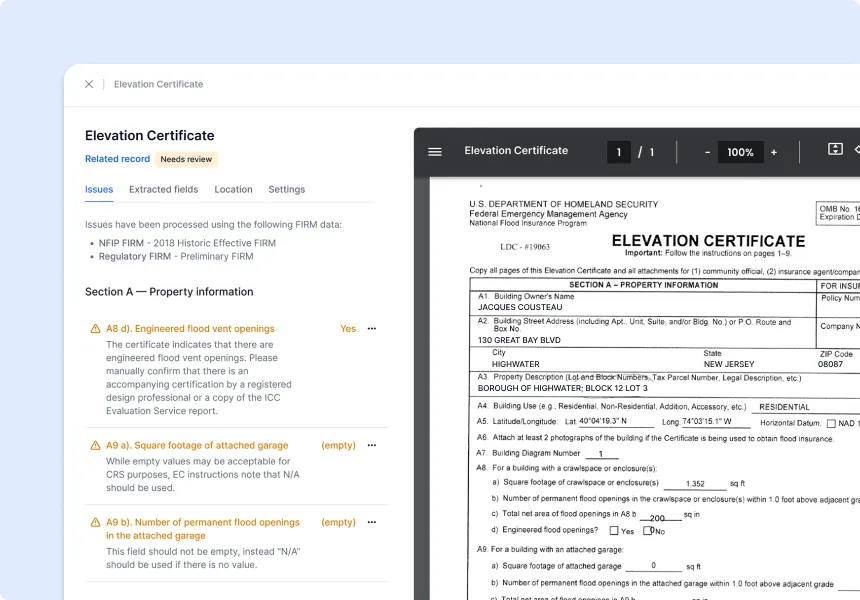
3. AI-Powered Error Detection
Our platform leverages machine learning to extract data and apply smart logic to flag inconsistencies.
How it works: When a document like an Elevation Certificate (EC) is uploaded, the platform automatically runs hundreds of validation checks to identify clerical or compliance issues.
The impact: This reduces the manual burden of document review, ensuring accurate submissions for programs like the Community Rating System (CRS), and reducing the risk of costly rework.
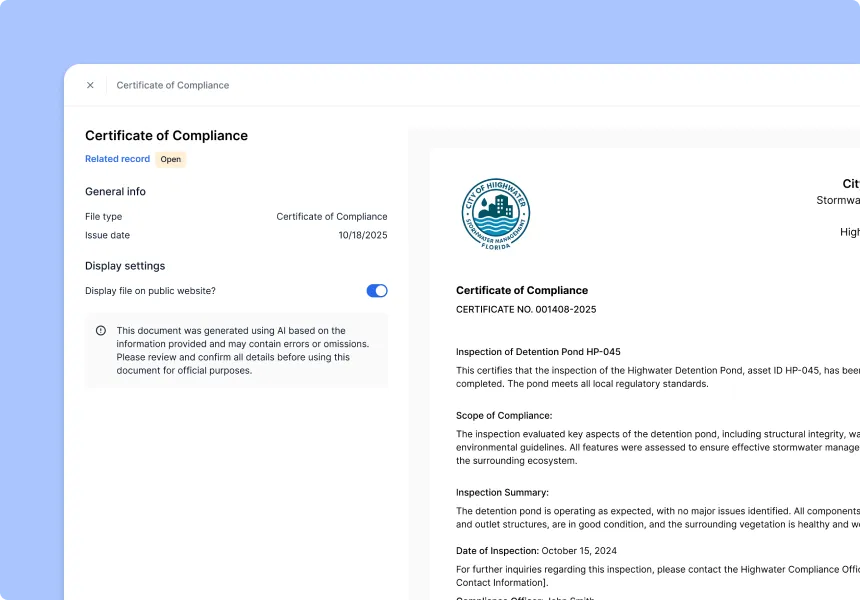
4. Intelligent Letter and File Generation
AI reduces the administrative burden of communication by auto-generating specific documents for residents and property owners.
How it works: By linking to federal, state, and local codes, Forerunner can intake an inspection record and automatically draft a letter - such as a code violation notice -referencing the exact regulatory sections needed.
The Impact: This speeds up notification timelines and increases transparency, allowing staff to focus on mitigation rather than paperwork.
Powering the Future of the Built Environment
As climate-related disasters intensify and community needs become more complex, the need for smart, accessible tools will only grow. Forerunner serves as a modern operating system, centralizing data and automating administrative tasks while maintaining oversight.
Want to learn more? Watch this demo from the Forerunner 2025 Summit to see how the Florida Division of Emergency Management is using some of our AI features.
FAQ
Ready to see how Forerunner can support your community?
Book a demo